
A Strange (But Nevertheless Typical) Story
Wesley Lowery was the 'golden boy' of black journalism before 'Me Too' destroyed him

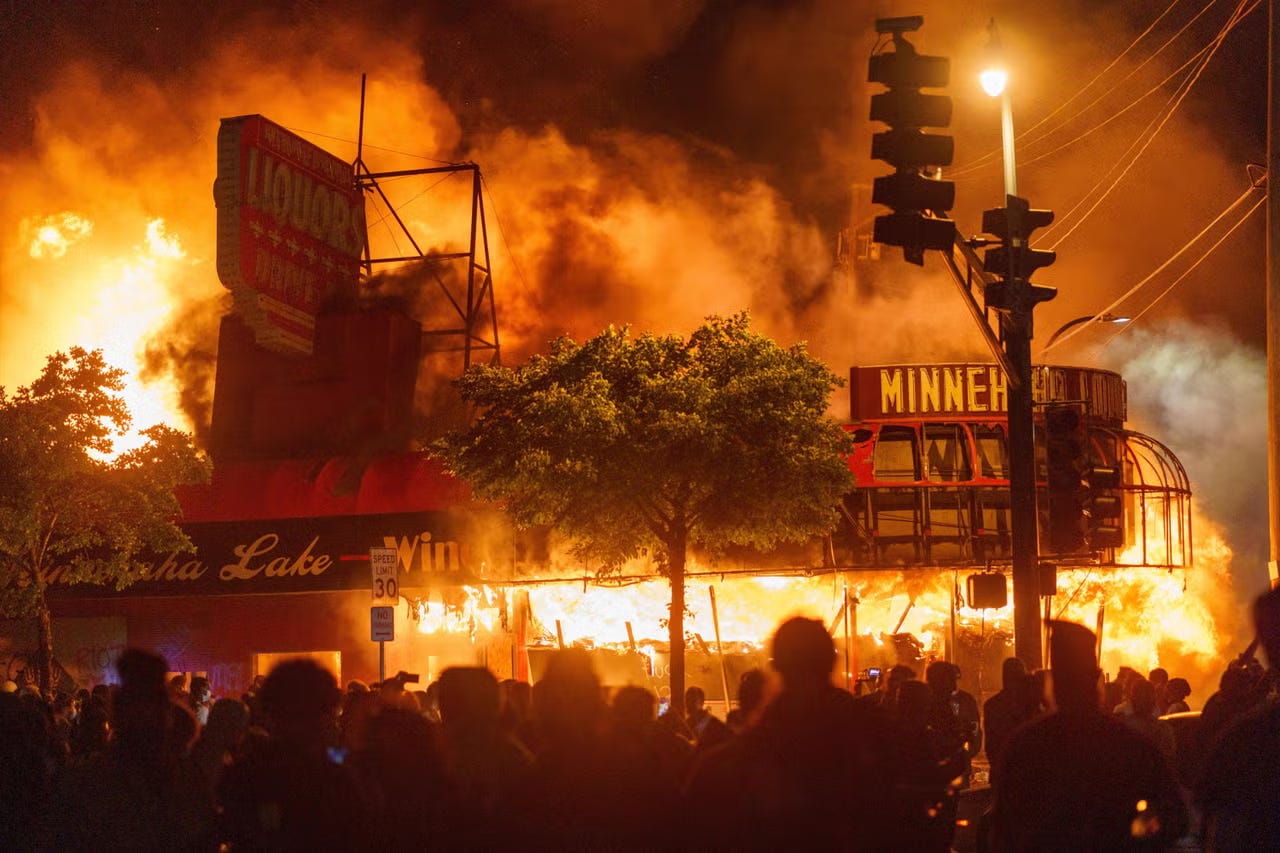
Everybody knows the story of Black Lives Matter. As both a slogan and a movement, it began with the Trayvon Martin shooting in Florida. That case ended with the 2013 acquittal of George Zimmerman, but a year later, when Michael Brown was shot by a cop in Ferguson, Missouri, Black Lives Matter turned into full-blown rioting and later, in the annus horribilis of 2020, the George Floyd case produced riots nationwide.
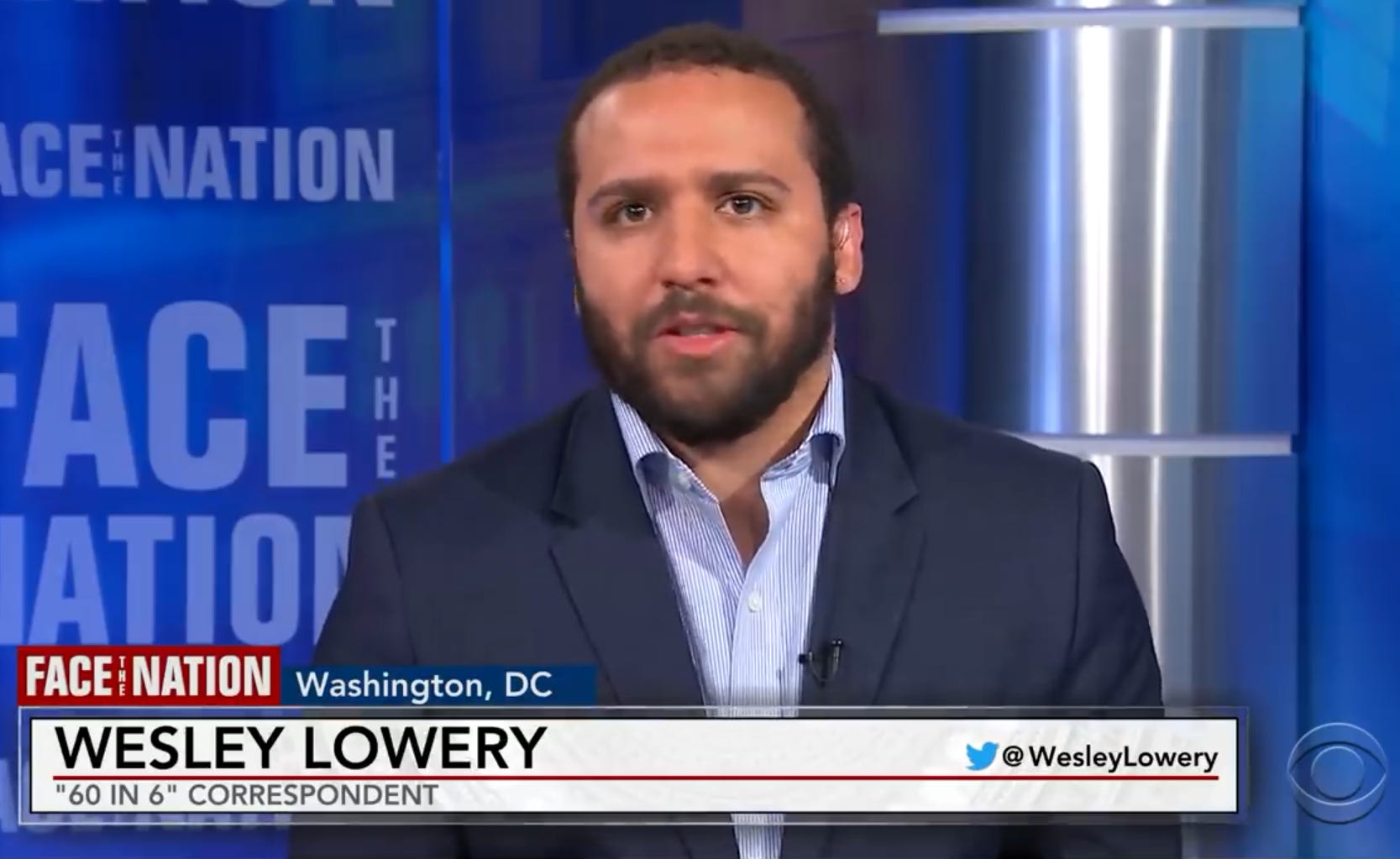
This arc of events added a remarkable impetus to the decades-long push for “diversity” in journalism, and Wesley Lowery was a prime beneficiary. He covered the Ferguson riots for the Washington Post and, two years later, won a Pulitzer Prize for his work on the Post’s “Fatal Force” project, which compiled a database of police shootings nationwide. He was only 25 years old, and was not only a Pulitzer winner, but already a published author. His first book, They Can’t Kill Us All: Ferguson, Baltimore, and a New Era in America’s Racial Justice Movement, was a bestseller.
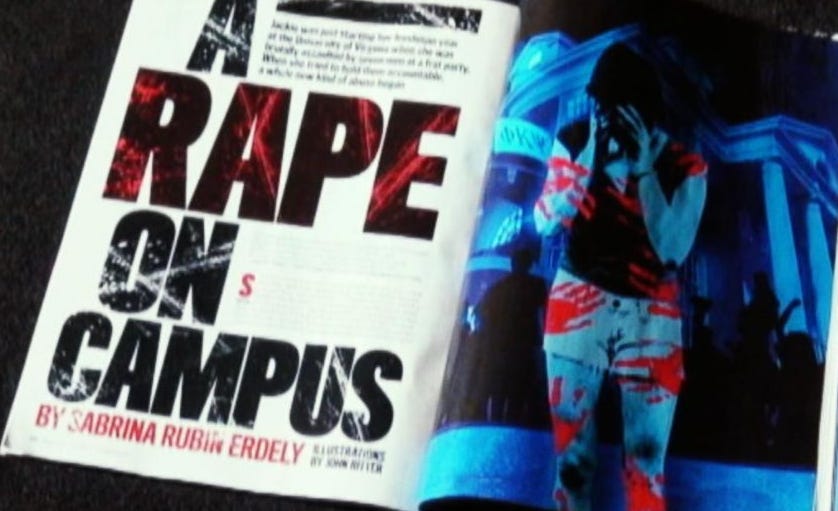
“Meteoric” is the adjective used to describe ascents as rapid as Lowery’s, and perhaps the Greek legend of Icarus is the best parable for his subsequent crash. For those of us old enough to remember the Stephen Glass scandal and the Jayson Blair scandal, it is important to note a distinction between Lowery and those other two high-profile journalism scandals. Unlike them, Lowery was not accused of doing fake journalism. His downfall had to do with what used to be called lechery or womanizing, but is now called “harassment” or even sexual assault. But there was no due process of law involved — no criminal charges, no trial, just the #BelieveWomen mentality that emerged in 2014 amid the “campus rape epidemic” hysteria that subsequently culminated in multimillion-dollar verdicts against Rolling Stone magazine.
When Lowery’s downfall came in March 2025, I missed it. In fact, despite his eminence, I’m pretty sure I’d never heard of him until Luke Rosiak of the Daily Wire called attention to the denouement of Lowery’s sexual harassment scandal, i.e., that he had also served as board chairman of the Center for Public Integrity, an investigative journalism nonprofit that collapsed at the same time Lowery was forced out of his faculty position at American University. Rosiak’s tweet sent me down a rabbit hole of research — what was the Center for Public Integrity and who is this Lowery guy?
One of the most valuable skills I’ve developed in my 40-year journalism career is focus. There is only so much room for information in anyone’s brain, and if you pay attention to everything, your brain will become clogged up with irrelevant stuff that is of no use to what it is you get paid to write about. This explains why Wesley Lowery had never caught my attention until I just happened to see Rosiak’s message and became curious. Lowery covered a beat that was very much of interest to me at the time of the Ferguson riots, the George Floyd riots, etc. These were events that I wrote about extensively, both at my blog and for The American Spectator. But I wasn’t following the mainstream media version of these events. Instead I was looking for facts and angles that the mainstream media were ignoring — that’s basically what conservative journalism is all about. So while it is possible that I saw some of
Wesley Lowery’s work at the Washington Post (and I definitely remember accessing the “Fatal Force” database, before they paywalled it), his name never registered because I wasn’t looking at the bylines on articles, I was looking for facts.
“Facts are stubborn things; and whatever may be our wishes, our inclinations, or the dictates of our passions, they cannot alter the state of facts and evidence.”
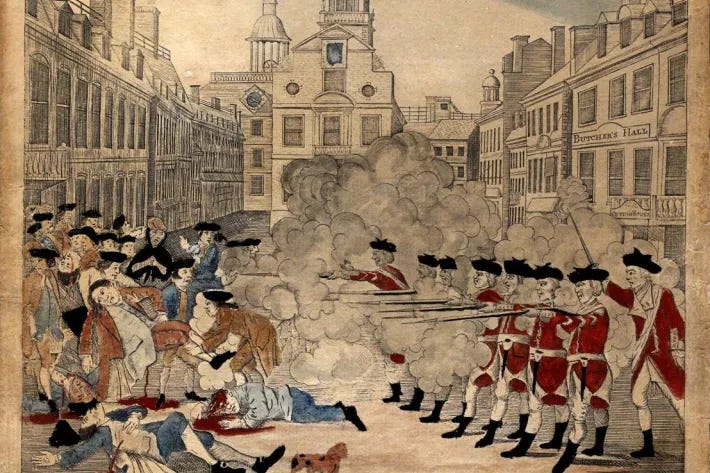
Adams was pleading an unpopular cause when he made that argument. British soldiers had opened fire on a rowdy mob of some 300 people in what quickly became known as “The Boston Massacre.” Five colonists were killed and six others wounded, and Adams was the defense attorney for eight of the soldiers, who were acquitted.
Perhaps the relevance of this to contemporary Black Lives Matter controversies is obvious enough without further explanation. For example, the “unrest” in Ferguson that first broke out in August 2014 was renewed three months later when a grand jury refused to indict Darren Wilson, the police officer who shot Michael Brown. Despite “the dictates of passions” surrounding that incident, there simply was not enough evidence to disprove Officer Wilson’s claim of self-defense. That’s how due process and the presumption of innocence works, and it would be nice if liberals — who nowadays claim to be defending democracy from the alleged menace of Trumpism — would recognize such cases as basic to upholding the rule of law.
It is not necessary to impose a “social justice” framework on every controversy, and yet this was the overarching narrative of Wesley Lowery’s journalism career, which led to his exit from the Washington Post three years after winning the Pulitzer Prize. Because whatever else may be said about “social justice,” it’s certainly not objective.
In August 2019, Jeremy Peters did a ten-year anniversary retrospective on the legacy of the Tea Party movement. His article in the New York Times was widely criticized, and Wesley Lowery took to Twitter to express his own disapproval:
“How do you write a 10 years later piece on the Tea Party and not mention — not once, not even in passing — the fact that it was essentially a hysterical grassroots tantrum about the fact that a black guy was president. Journalistic malpractice.”
That was one of several of Lowery’s comments on Twitter cited in a warning letter which Baron and managing editor Tracy Clark sent Lowery in September 2019, saying that his “conduct on social media … violates The Washington Post’s policy and damages our journalistic integrity.” Without regard to the “journalistic integrity” of the Washington Post (of which I’ve never thought much) the question occurs: Was it correct to call the Tea Party movement “a hysterical grassroots tantrum about the fact that a black guy was president”? Was this a fact? Because few journalists on the planet covered the Tea Party movement as extensively as I did in 2009-2010, and while it was certainly “grassroots,” I would dispute the “hysterical tantrum” part of Lowery’s description. Furthermore, the Tea Party people I knew best (including many of the most prominent leaders) were at least as angry at the Republican Party establishment as they were toward President Obama. But it’s like they say: If the only tool you’ve got is a hammer, every problem looks like a nail. And if the only perspective that matters to you “social justice,” every problem looks like RAAAAACISM!
More importantly to this story, however, publicly speculating about people’s motives is not what the Washington Post was paying Wesley Lowery to do. He was supposed to be a reporter and, as Baron and Clark said in their warning letter, “You have frequently expressed views that are political in nature and impact on the ability of The Post to assign you to stories about which you have expressed those views.” Do not doubt that nearly all employees of the Washington Post are liberal Democrats who actually agreed with Lowery’s opinions, e.g., the Tea Party as a racist “tantrum.” But their policy is to be secretive about their partisan and ideological bias, a clumsy deception (clumsy in that no one is really deceived) they call “journalistic integrity.”
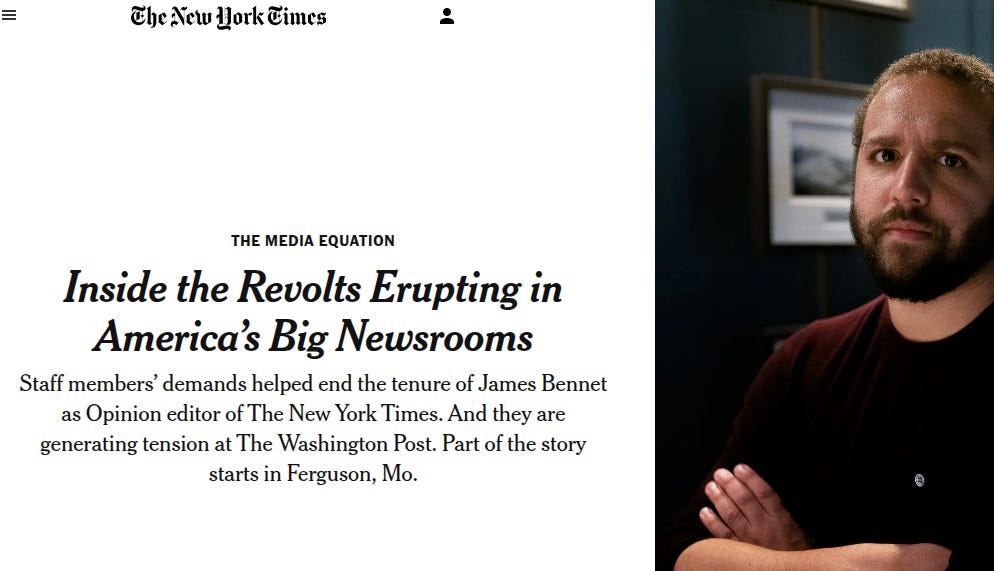
Six months after the confrontation between Lowery and his editors, he left the Post, and in June 2020 was featured in a New York Times profile by Ben Smith:
Mr. Lowery’s view that news organizations’ “core value needs to be the truth, not the perception of objectivity,” as he told me, has been winning in a series of battles, many around how to cover race. …
“American view-from-nowhere, ‘objectivity’-obsessed, both-sides journalism is a failed experiment,” he tweeted of [a controversy at the New York Times]. “We need to rebuild our industry as one that operates from a place of moral clarity.”
And by “moral clarity,” of course, he means Communist ideology.
See? That’s the kind of thing I get to say here because there’s no managing editor to be appeased, no pretense of “objectivity” imposed on the reader. And now that Lowery is freed from the shackles of gainful employment, he can speak his mind without worrying that somebody’s going to report him to Human Resources.
As for Lowery’s downfall, it was the typical “inappropriate sexual comments … and unwanted sexual advances” that got him canned at American University. Because I am in many ways old-fashioned, the phrase “unwanted sexual advances” always makes me wonder, exactly how is a man supposed to know whether his “advances” are “unwanted” prior to actually making the aforesaid advances? It’s a meme already.
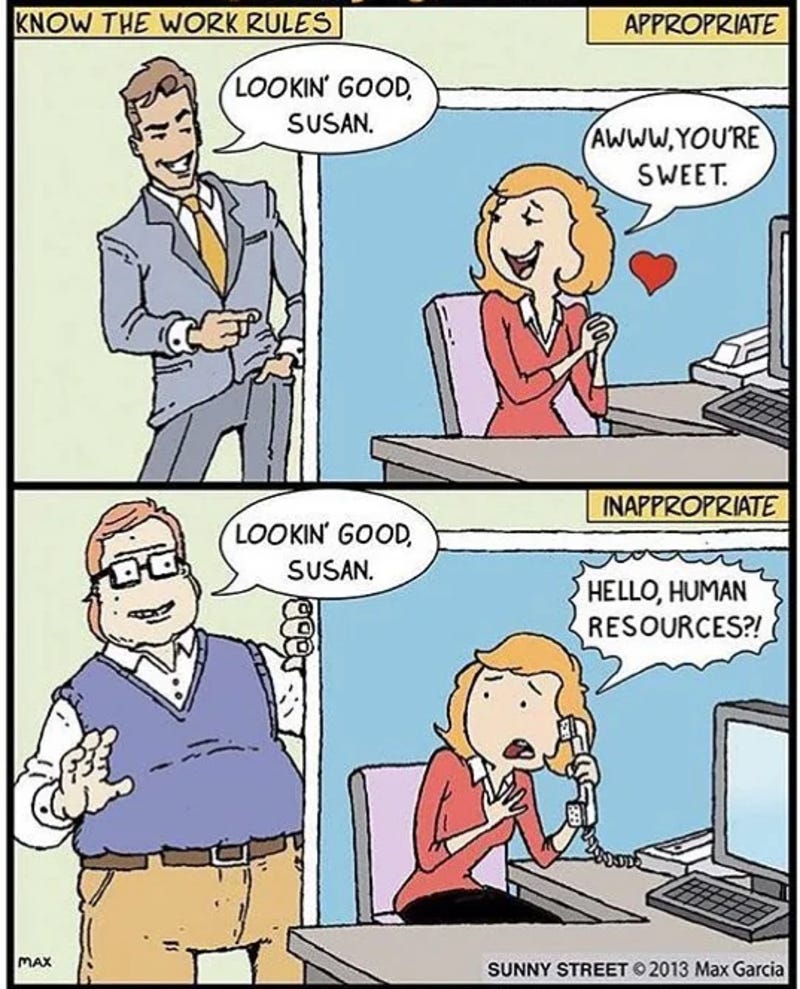
Making “unwelcome” advances and “inappropriate” comments were apparently sufficient for American University to part ways with Lowery, which makes me wonder why the administration doesn’t simply prohibit heterosexuality, per se. But in the wake of his ouster from the faculty, Lowery became a target for investigative journalism:
“[T]he Columbia Journalism Review … reports that Lowery engaged in a pattern of serious sexual misconduct while he was at American University, with several women saying that Lowery had pressured them into sex or sexually assaulted them after he plied them with alcohol. It is a deeply disturbing story.”
That’s a quaint Victorian phrase — Lowery plied them with alcohol and then, like that scandalous cad Rhett Butler, took them buggy-riding without a chaperone!
So to speak, anyway … Far be it from me to defend Lowery or to minimize whatever his “deeply disturbing” offenses may have been. My point is that nowadays, mere accusations of wrongdoing are considered sufficient grounds for career destruction; there is no due process, cross-examining witnesses, and so forth. In passing along the “deeply disturbing” accounts of Lowery’s reign of sexual terror (as we are supposed to regard it), Northeastern University journalism professor Dan Kennedy expressed his admiration for Lowery’s critique of journalistic objectivity:
“I’ve assigned his essays on objectivity as well as the video of a panel discussion he took part in on that topic …
“It is a real loss that his voice will no longer be heard. …
“Now Lowery has been silenced — has silenced himself. The debate over journalistic ethics, objectivity and race will be poorer without his contributions.”
He’s been silenced! His voice will no longer be heard!
Journalism is a big club, but Lowery is no longer eligible for membership. Probably there’s some kind of lesson to be learned from this, but I don’t know what it is.
Haven Monahan could not be reached for comment.
"Harassment" is always in the eye of the reporter. I worked for many years in a large corporation (retired now). Once (30-odd years ago), there was a big harassment scandal at the location I was then working, and all of us salaried employees wound up with a full day "training" session from HR. We were told right out that consistency didn't matter. Liked it from one but not the other was no defense for the accused (like the meme in the article). I have long thought that it is entirely political - a pretense used to bring down someone on the political outs. I'm not defending Lowery, I have no idea what the circumstances of the case were, yet I would guess that he managed to irritate the wrong individuals, and that ended his immunity to harassment claims. Now he's politically untouchable. I'm not saying it's not deserved, just that the actual rights and wrongs of it are irrelevant. It's all a show me the man, I'll show you the crime deal.